
Crafted exhibition at Kode, Bergen
This exhibition of work by over 100 contemporary craft makers was a highlight of my recent trip to Norway.
I spent a week in Bergen at the end of May. A few days catching up with a Norwegian friend from art college and the weekend with a group of school friends who had flown over from the UK. I hadn’t planned the trip around any exhibitions so it was a delight to discover a huge showcase of contemporary craft in one of the city’s main gallery spaces Lysverket, part of Kode.
Clay taken straight from the earth. Logwork. French polish. Sanding. Whittling. Sprang twining. Plaiting. Plant dyeing… As though it were the very first time.
Artists are rediscovering traditional tools, old techniques and obsolete production methods. The tide is turning away from conceptual art – often perceived of as ‘difficult’ – towards tangible forms of artistic expression, rooted in traditional crafts. Perhaps it is a response to our increasingly digitised lives or the ongoing climate crisis?
A search for what is real or essential. A return to basic materials and age-old crafts.
Wall text from the exhibition
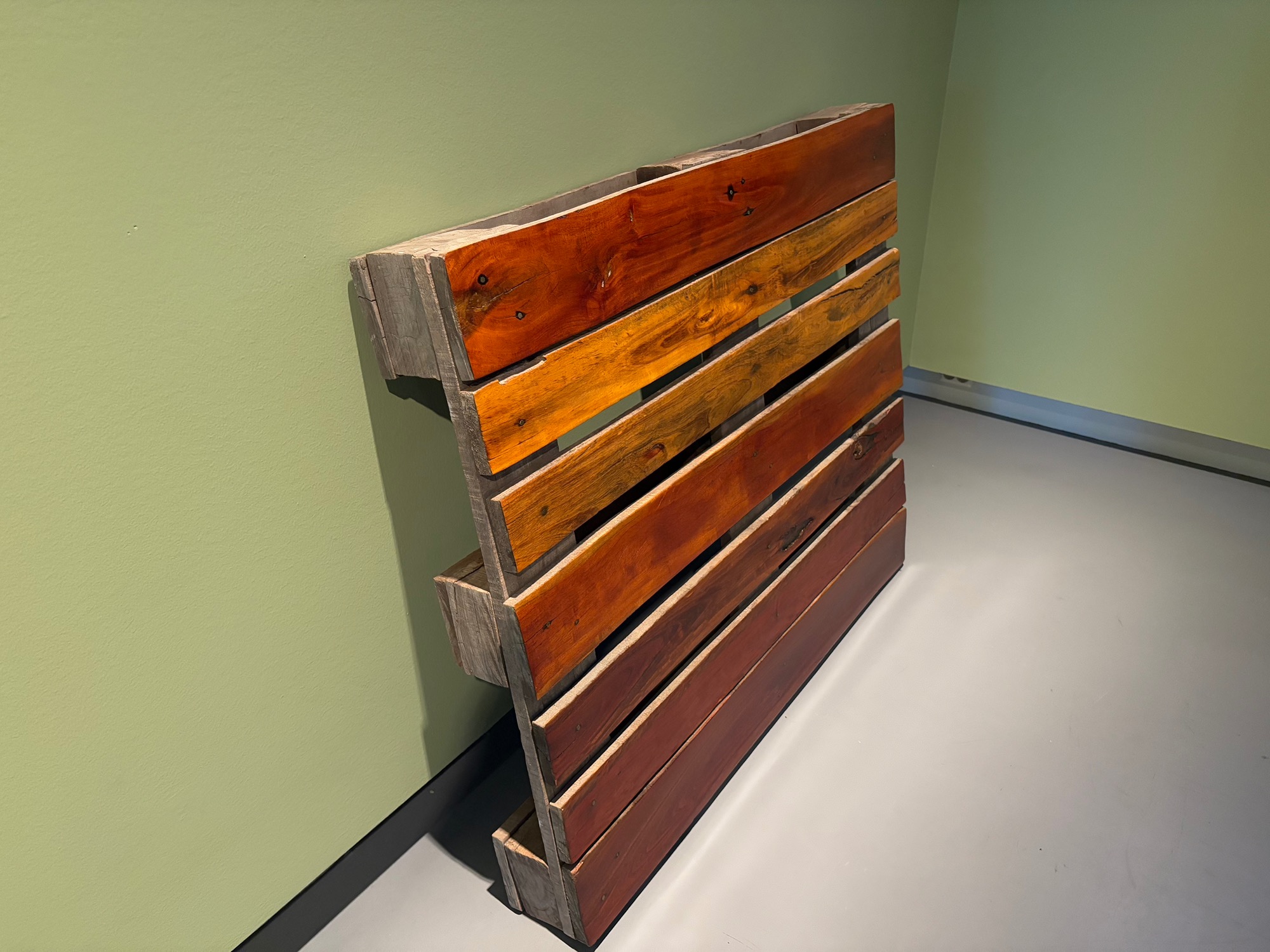
Marianne Bredesen’s ‘Klassereise/Social Mobility’ draws our attention to the materiality of a ubiquitous wooden pallet. By polishing parts of the pallet Bredesen reveals that it is partially made from the tropical hardwood mahogany. We don’t know where or when the pallet was made, or if the hardwood was chosen for its strength, or just because it was available. As the curator’s note beside the piece says, ‘this hand-polished pallet challenges our preconceptions of high- and low-status objects by drawing on rich references from the history of furniture’.
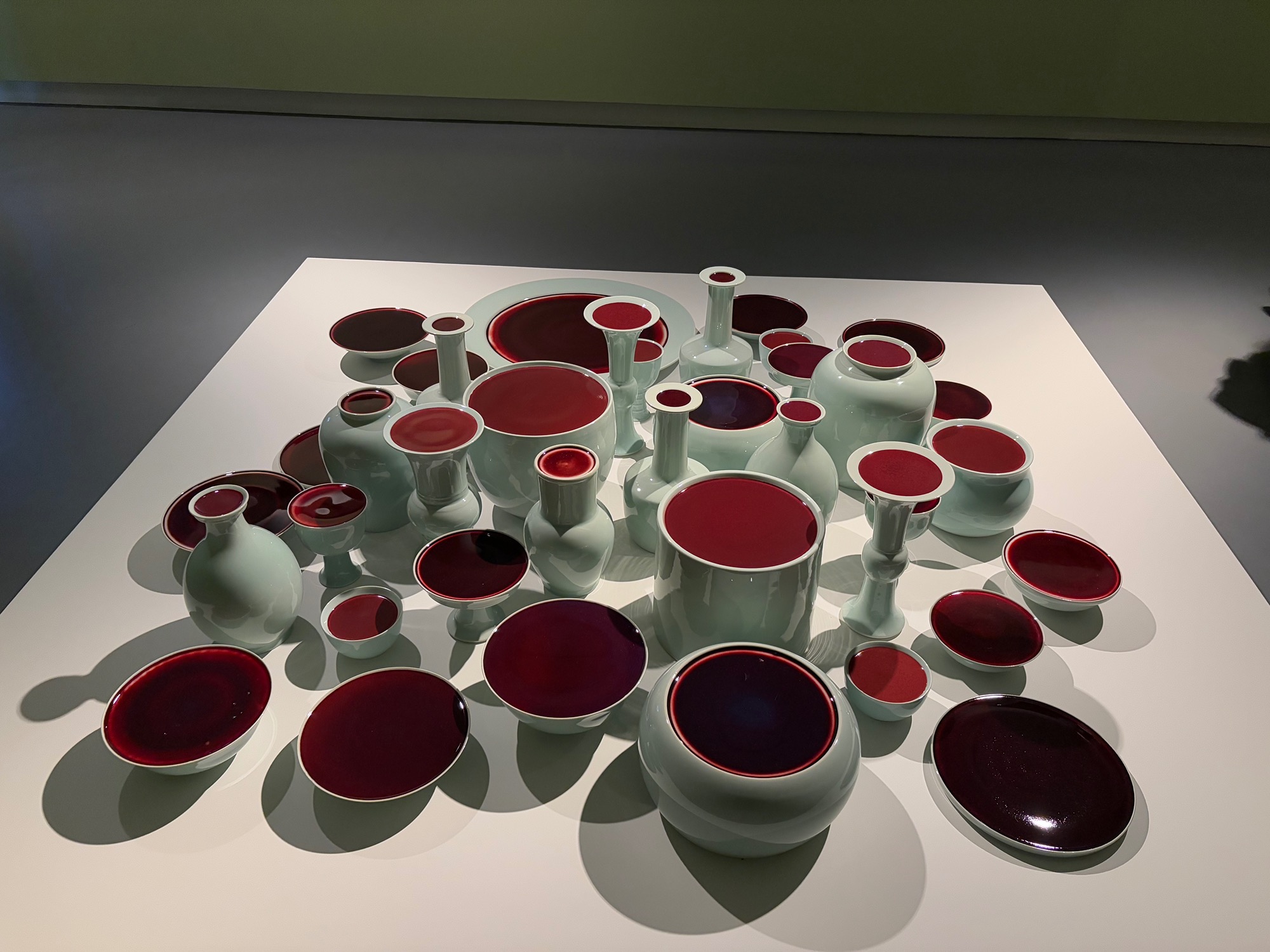
Liu Jianhua’s ‘Container series’ of ceramics glazed with celadon and sang-de-boeuf create an illusion of blood filled pots that stopped me in my tracks. ‘Both glazes have deep roots in Chinese tradition. The green glaze, which goes by the French name celadon in the Western world, goes back to the refined ceramics of the Song dynasty (960-1279), and its resemblance to the green lustre of Jade has made it one of the most cherished glazes in Chinese culture to this day. The deep red glaze also has a Western name, sang-de-boeuf – or oxblood – which evokes its eerie appearance.’ (Curator’s note wall text.) The contrast of the elegant vessels and the visceral gory red about to overflow from each one is striking. Even without reading the accompanying text I had thoughts of violence hidden behind respectability and civilisations built on the blood of their civilians.
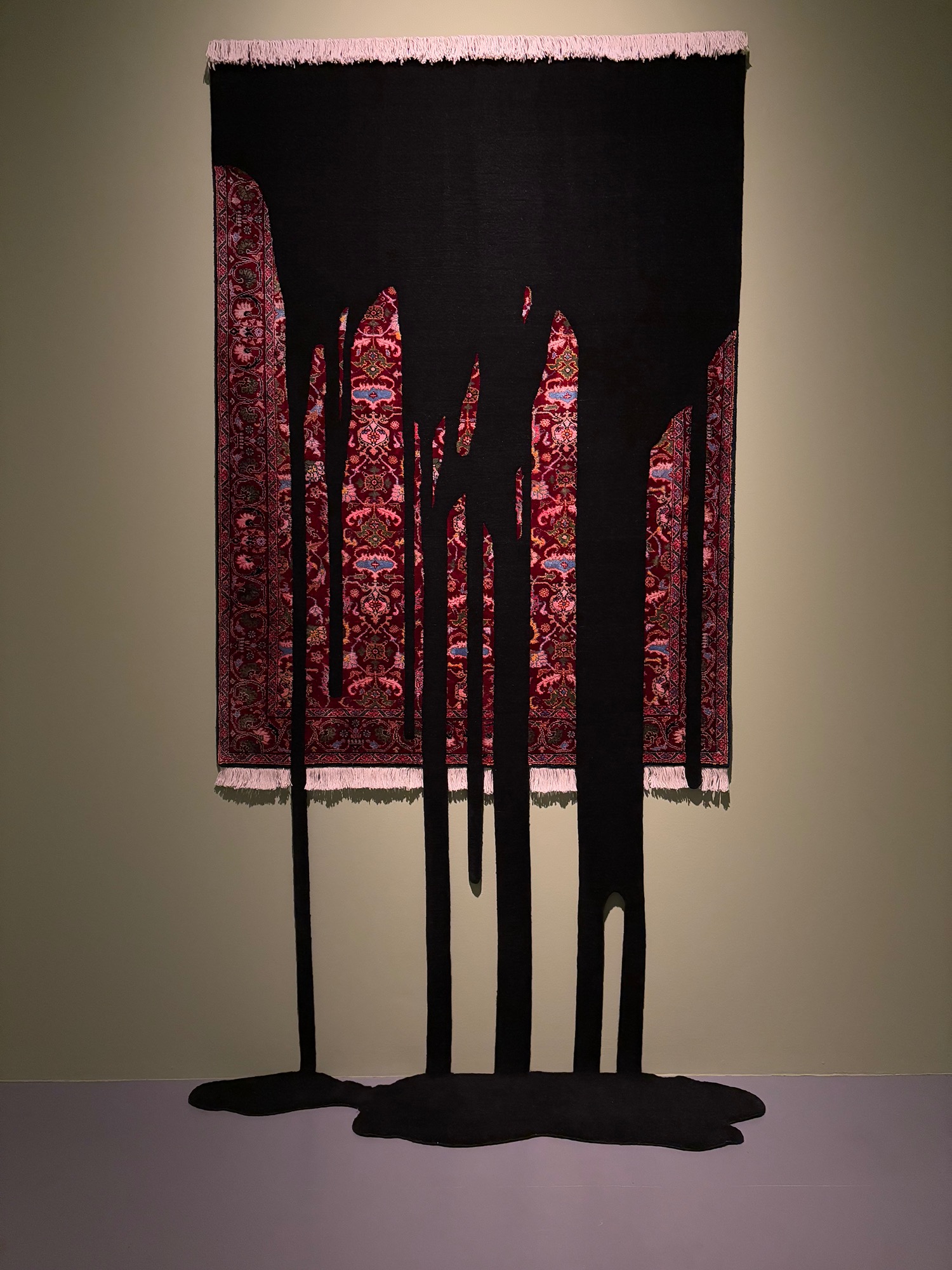
‘Drivstoff/Fuel’ by Azerbaijani artist Faig Ahmed was another piece that had me rubbing my eyes in disbelief. The intricate, traditional hand-knotted carpet had a (hand-knotted carpet) of oil seeping down and pooling on the floor. The artist collaborated with experienced carpet weavers to create the work which explores the impact of oil on the country, using one of its traditional crafts.
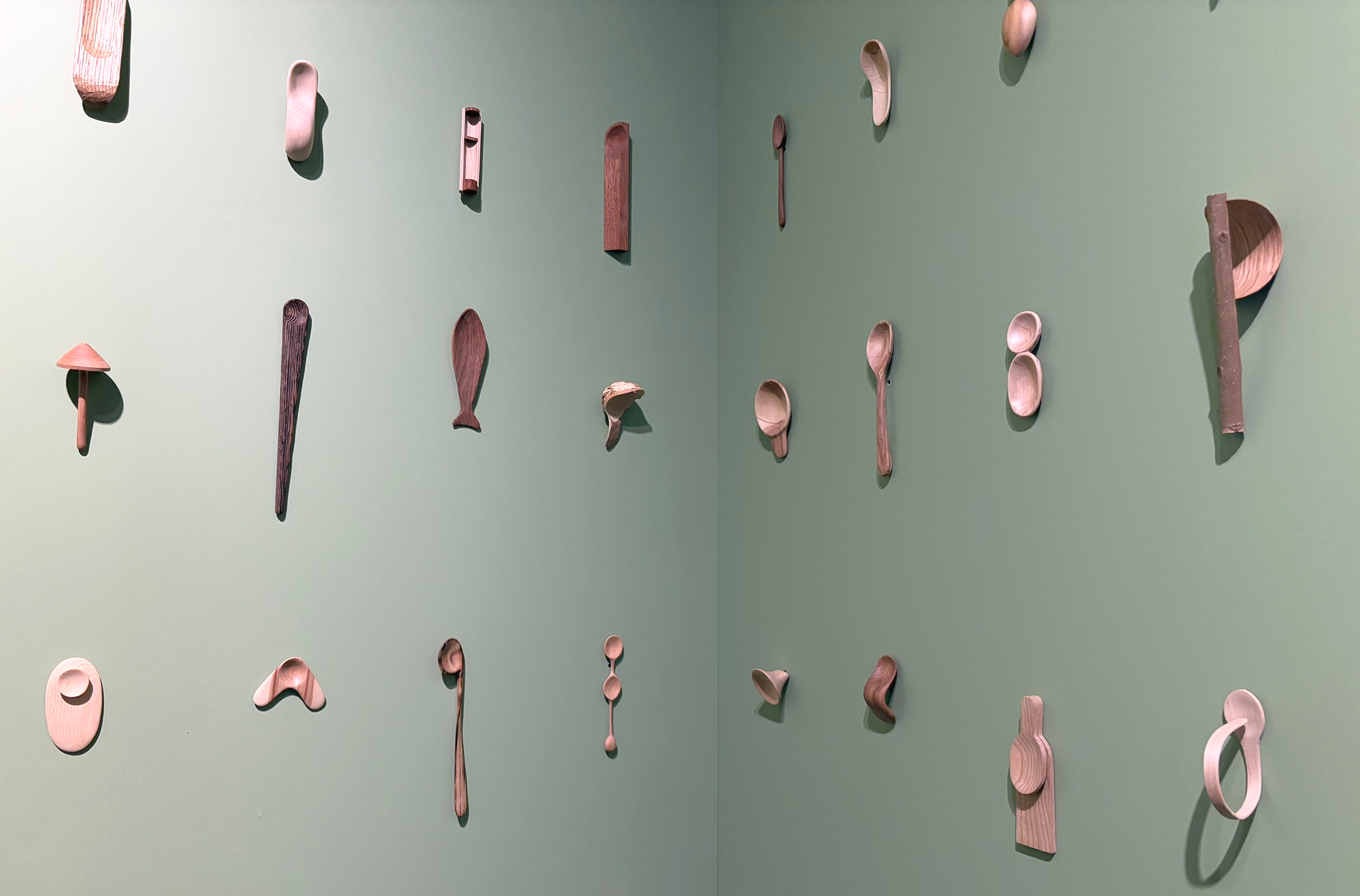
Stian Korntved Ruud’s ‘En skje om dagen/Daily Spoon’ features 365 hand carved spoons, one for each day of the duration of the project. The breadth of shapes and designs were amazing, and each still functions as a spoon. A wondrous exhibition of human creativity and ingenuity, each spoon was fascinating, but en masse they created a stunning display.
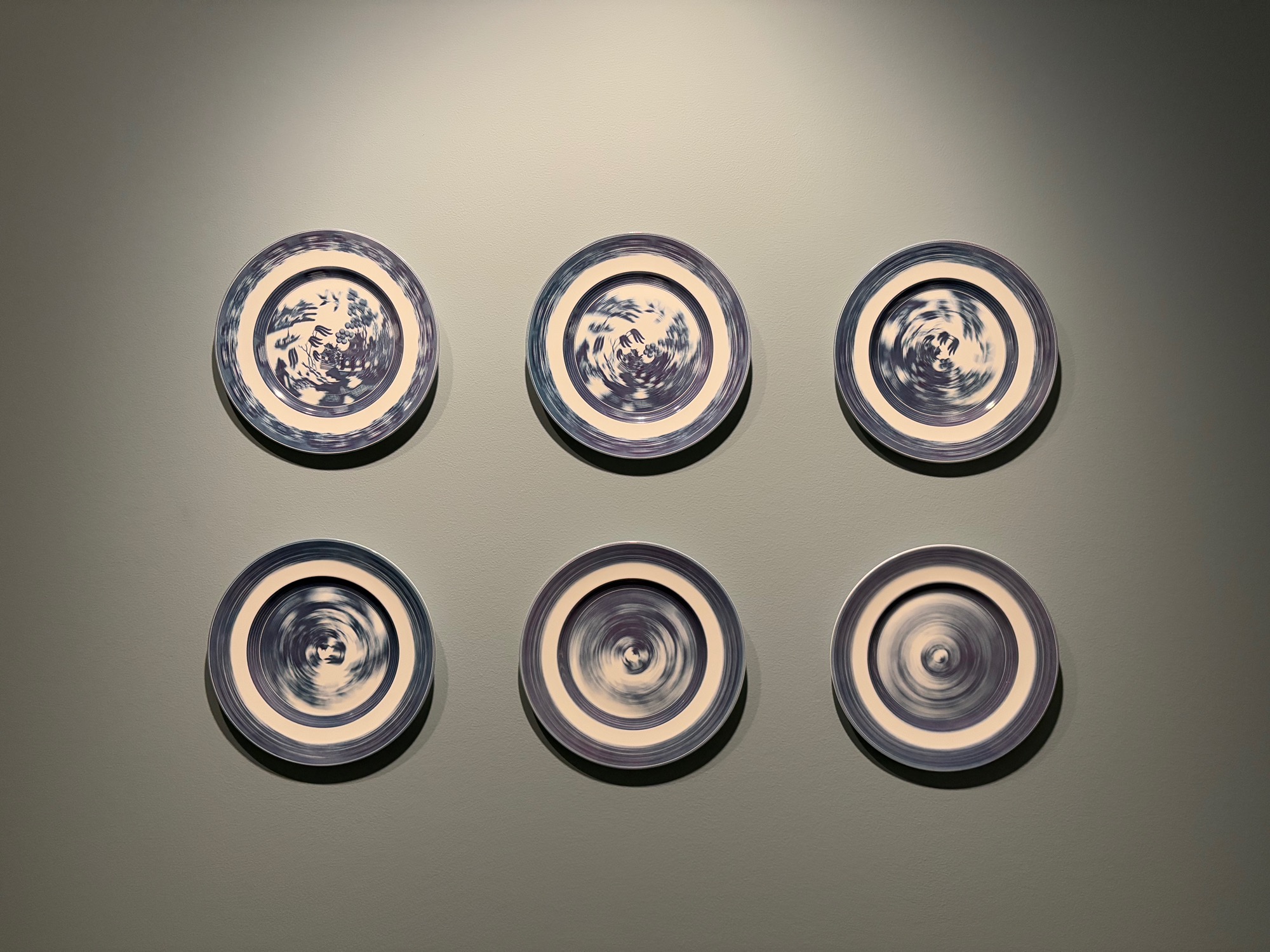
British artist Robert Dawson’s piece ‘Spin’ uses our knowledge of the traditional willow pattern plate design to give the illusion of movement. The effect is uncanny, and almost nauseating. By playing with the household ceramics that we feel we know, the objects that we don’t expect to change, Dawson straws our attention to the plate and the design.
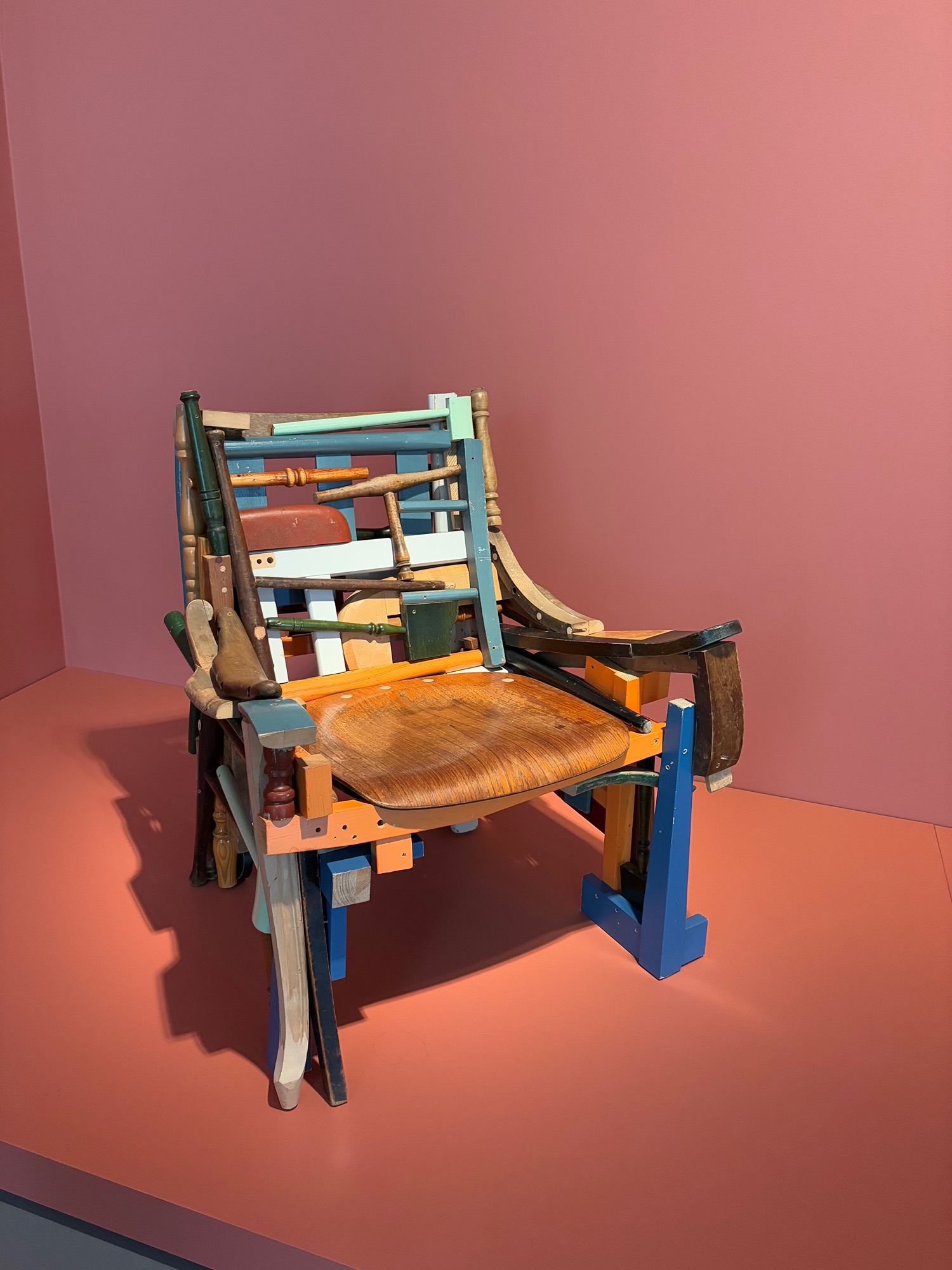
Erland Leirdal’s ‘Atterkomst/Return’ is a chair made from the parts of many, many other chairs. It seems to compress time and space and to almost be alive. It reminds me of a stop-motion animation, movement that is made up of visible steps. Surely a chair made of many chairs must have the comfort and stability of all of those chairs combined?
The wall text as you enter the exhibition contrasted contemporary craft with conceptual art – but there were strong ‘concepts’ behind almost all of the pieces in this show. Perhaps some viewers find it easier to consider the ideas being explored by familiar objects and materials, but to me this was conceptual craft – and I mean that as a compliment!
I’m interested in work that encourages us to consider how our world is constructed, and how it could be constructed in new and different ways. The pieces in this exhibition sent my mind whirring.